Mastering Korean Etiquette: 7 Essential Tips for US Travelers Visiting in 2026
Anúncios
Planning a trip to the vibrant and culturally rich land of South Korea in 2026? As a US traveler, immersing yourself in Korean culture is undoubtedly a highlight. However, what truly elevates your experience and earns the respect of locals is understanding and practicing proper Korean etiquette. South Korea boasts a profound history and a unique social fabric where respect, hierarchy, and communal harmony are paramount. Navigating these cultural nuances can seem daunting at first, but with a little preparation, you can ensure your visit is not only enjoyable but also deeply respectful and memorable.
Anúncios
This comprehensive guide is specifically tailored for US travelers heading to South Korea in 2026, offering seven essential Korean etiquette tips that will help you bridge cultural gaps and foster positive interactions. From the subtle art of bowing to the intricacies of dining and public behavior, mastering these aspects will significantly enhance your journey. Let’s dive into the core principles of Korean etiquette to prepare you for an incredible adventure.
Anúncios
1. The Art of Bowing: More Than Just a Greeting
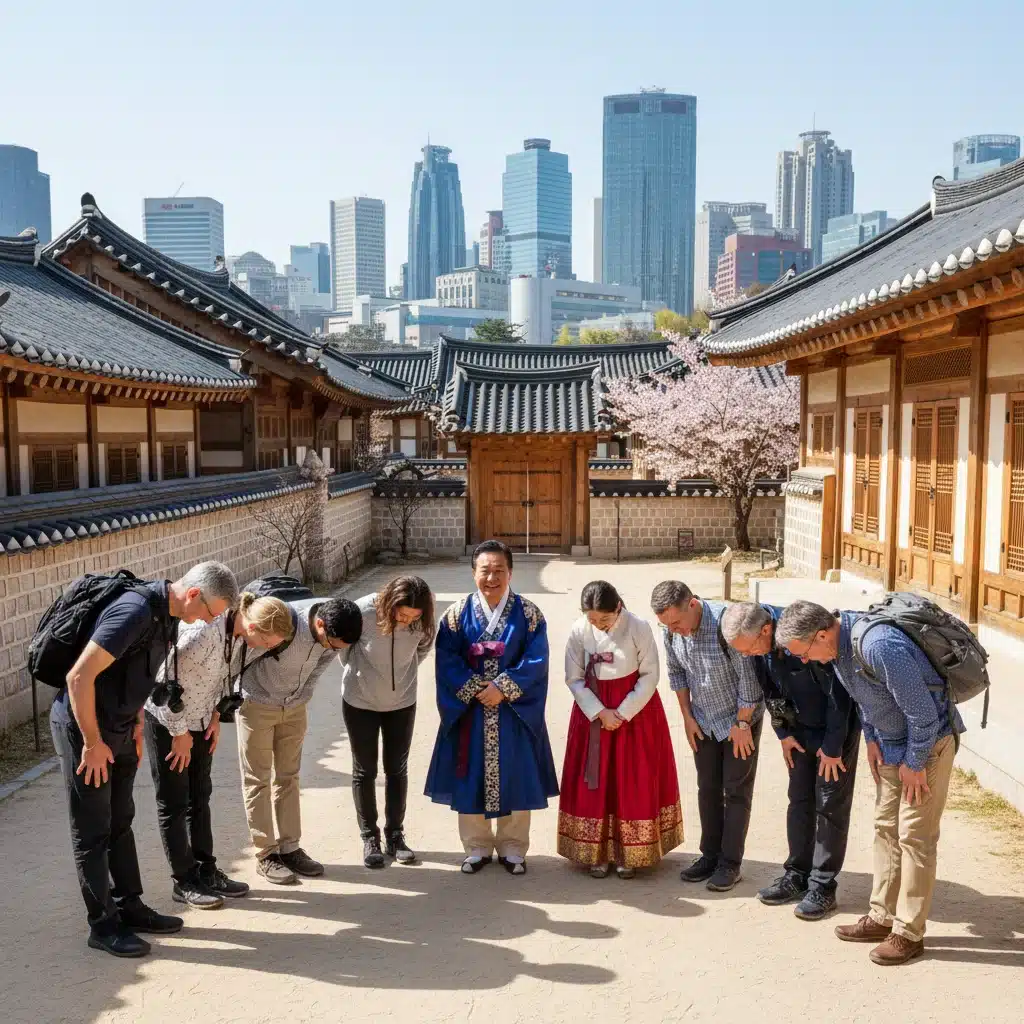
One of the most fundamental aspects of Korean etiquette is the bow. Unlike a handshake, which is common in Western cultures, bowing is the primary form of greeting, showing respect, and expressing gratitude or apology in South Korea. For US travelers, understanding the nuances of bowing is crucial. While you’re not expected to perform a perfect bow like a native Korean, making an effort goes a long way.
Understanding the Bow’s Significance
The depth and duration of a bow often depend on the relative social status and age of the individuals involved. A deeper, longer bow signifies greater respect. When greeting someone older or of higher status (e.g., a business associate, a senior, or a server in a restaurant), a respectful bow is appropriate. For acquaintances or people of similar age, a slight nod of the head may suffice. Children are taught from a young age to bow to their elders, reinforcing the strong emphasis on hierarchy and respect within Korean society.
Practical Bowing Tips for US Travelers
- When to Bow: Bow when meeting someone for the first time, when saying goodbye, when expressing thanks, or when apologizing.
- Depth of Bow: A general rule of thumb for foreigners is a 15-degree bow for casual greetings and a 30-degree bow for showing more respect. A 45-degree bow is reserved for very formal situations or sincere apologies.
- Eye Contact: Unlike in Western cultures where direct eye contact during a greeting is a sign of confidence, during a bow in Korea, it’s customary to lower your gaze slightly.
- Hand Placement: Men typically place their hands at their sides, while women often place their hands clasped together in front of them.
- Don’t Overdo It: While showing respect is important, excessive bowing can sometimes come across as insincere or even mocking. Observe locals and try to mirror their behavior.
Mastering this essential element of Korean etiquette will immediately set a positive tone for your interactions and demonstrate your appreciation for Korean culture.
2. Dining Etiquette: A Feast of Respect and Tradition
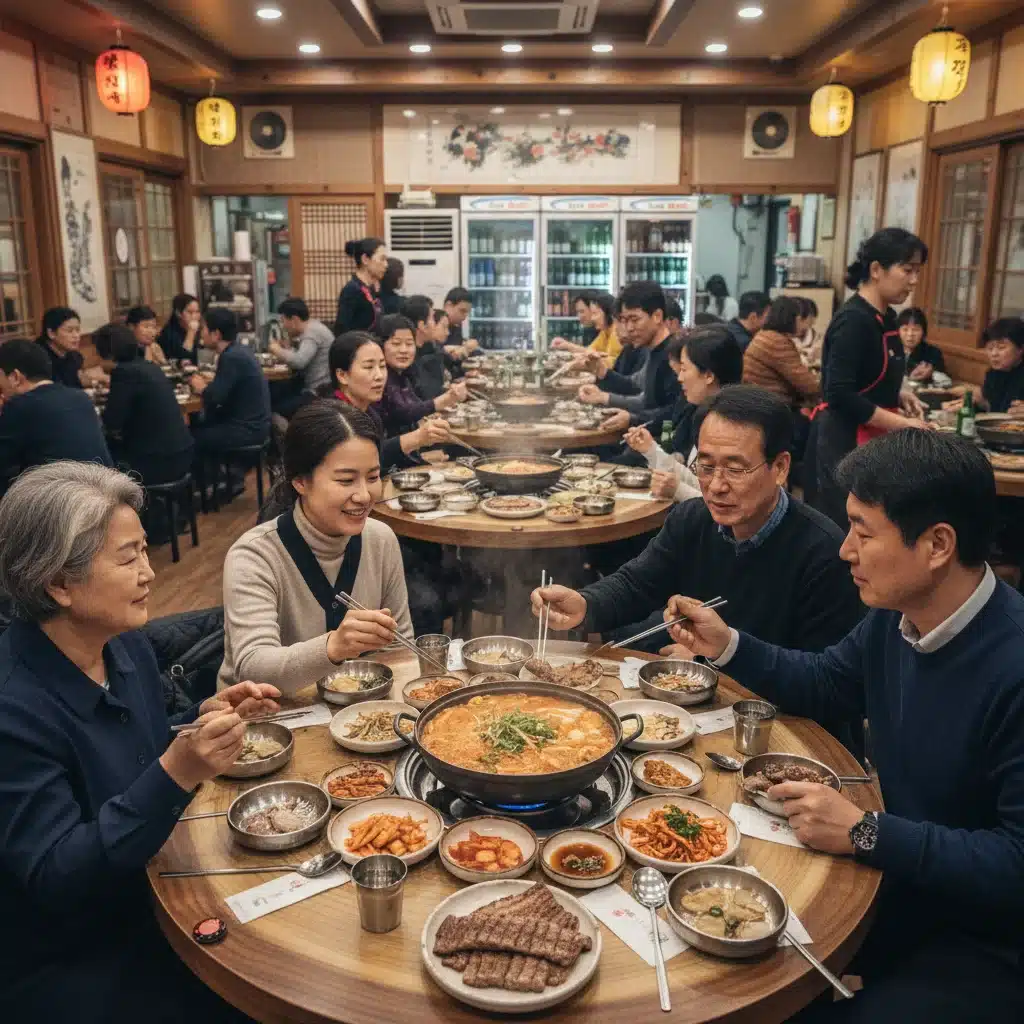
Korean dining is a communal experience, rich with tradition and specific Korean etiquette tips. Sharing food is central, and there are several unwritten rules that US travelers should be aware of to avoid accidental offense.
Before the Meal
When invited to a meal, it’s considered polite to wait for the eldest or most senior person at the table to sit down and begin eating before you do. This act of deference is a cornerstone of Korean etiquette. Similarly, they will often be the first to pick up their chopsticks or spoon. If you are dining with Koreans, it’s always a good idea to offer to pour drinks for others, especially for elders, and to accept a drink when offered, even if it’s just a small sip.
During the Meal
- Chopsticks and Spoons: Koreans primarily use chopsticks for solid food and a spoon for rice and soup. Never stick your chopsticks upright in your rice bowl; this resembles incense sticks at a funeral and is considered very bad luck. Also, avoid clanking your utensils against your bowl or pointing them at others.
- Passing Dishes: When passing dishes, use both hands to show respect, especially when passing to an elder. Similarly, receive items with both hands or with one hand supporting the other forearm.
- Eating Speed: Try to match the eating pace of your dining companions. Finishing too quickly might suggest you’re still hungry, while eating too slowly could imply you don’t enjoy the food.
- Leaving Food: It’s generally considered polite to finish all the food on your plate, especially rice, as it signifies appreciation for the meal and avoids waste.
- Noise: While slurping noodles is acceptable and can even signify enjoyment, try to avoid making overly loud chewing noises.
After the Meal
It’s customary for the eldest person or the host to pay for the meal. While offering to pay is a nice gesture, it might be politely declined. If you are insistent, do so subtly. A simple “잘 먹었습니다” (jal meogeosseumnida), meaning “I ate well,” is a polite way to thank your host.
3. Public Conduct: Maintaining Harmony and Order
Public spaces in South Korea, particularly in bustling cities like Seoul, are remarkably orderly and clean. Adhering to public Korean etiquette not only reflects well on you but also contributes to the pleasant environment for everyone.
On Public Transport
South Korea’s public transportation system is world-class. Here are some key Korean etiquette tips for using it:
- Waiting in Line: Always wait patiently in line to board buses or subways. Allow passengers to exit before attempting to enter.
- Reserved Seating: Many public transport vehicles have designated seats for the elderly, pregnant women, and those with disabilities. Even if they are empty, avoid sitting in them unless no other seats are available and no one who needs them is present.
- Volume Control: Speak softly on your phone or, ideally, avoid talking on your phone altogether. Keep conversations with companions at a low volume.
- Backpacks: When standing in a crowded train or bus, it’s courteous to remove your backpack and hold it in front of you or place it between your feet to avoid bumping into others.
- Eating and Drinking: While not strictly forbidden, eating or drinking on public transport is generally frowned upon, especially if it creates odors or messes.
General Public Behavior
- Personal Space: While Koreans are generally accustomed to crowded spaces, maintain a respectful distance when conversing.
- Littering: South Korea is incredibly clean. Littering is considered highly disrespectful and can result in fines. Always use designated trash receptacles.
- Noise Levels: Keep your voice down in public spaces, especially late at night.
- Photography: Always ask for permission before taking close-up photos of individuals, especially children. It’s generally fine to photograph street scenes or landscapes.
4. Gift-Giving and Receiving: Thoughtful Gestures
Gift-giving is an important aspect of Korean etiquette, especially when visiting someone’s home or attending a special occasion. It’s a way to show appreciation, respect, and build relationships.
Giving Gifts
- Presentation Matters: Gifts are often beautifully wrapped. Use both hands when presenting a gift.
- What to Give: Popular gifts include local specialties from your home country, high-quality snacks, coffee, or small, practical items. Avoid giving sharp objects (like knives or scissors) as they can symbolize cutting ties.
- Number Four: Avoid gifts in sets of four, as the number four (사, sa) sounds similar to the word for death (사, sa) in Korean and is considered unlucky.
- Modesty: When offering a gift, it’s polite to downplay its value, saying something like, “It’s nothing much, but I hope you like it.”
Receiving Gifts
- Accept with Both Hands: Always accept a gift with both hands as a sign of gratitude and respect.
- Don’t Open Immediately: It’s common Korean etiquette to set the gift aside and open it later, out of the giver’s immediate sight. This avoids any awkwardness if the gift is not to your taste or if you receive multiple gifts.
- Express Thanks: A sincere “감사합니다” (gamsahamnida), meaning “thank you,” is always appreciated.
5. Addressing People: Understanding Titles and Honorifics
Hierarchy and respect for age and status are deeply ingrained in Korean etiquette. This is most evident in how people address each other.
Using Titles
Unlike in Western cultures where first names are quickly used, in Korea, it’s customary to use titles and honorifics. Addressing someone by their first name, especially if they are older or of higher status, is considered impolite.
- Family Names First: Koreans place their family name first, followed by their given name (e.g., Kim Min-joon).
- Professional Titles: If someone has a professional title (e.g., Professor, Director), use it.
- Suffixes: The suffix -ssi (씨) is a common honorific used after a full name or a given name when addressing someone of similar or slightly higher status. For example, Min-joon-ssi.
- Older Individuals: For older individuals, especially those not in your immediate family or close circle, using terms like Ajumma (아줌마 for married, middle-aged to elderly women) or Ajeossi (아저씨 for married, middle-aged to elderly men) is common, though it’s best to use these with caution as they can sometimes be perceived as informal. When in doubt, it’s safer to use a more formal title or simply a polite bow and a smile.
- Asking for Preferred Address: If you are unsure, it’s perfectly acceptable to politely ask how someone prefers to be addressed.
Making an effort to use appropriate titles demonstrates your understanding of Korean etiquette and your respect for the local culture.

6. Footwear Etiquette: Respecting Sacred and Domestic Spaces
One of the most visible aspects of Korean etiquette that often surprises US travelers is the strict rule regarding footwear. Removing your shoes before entering certain spaces is a sign of cleanliness and respect.
When to Remove Your Shoes
- Homes: Always remove your shoes before entering a Korean home. You’ll usually find a shoe rack or designated area near the entrance.
- Traditional Restaurants: Many traditional Korean restaurants, especially those with floor seating (ondol style), require you to remove your shoes. Look for a shoe rack near the entrance or observe what others are doing.
- Temples and Religious Sites: When visiting Buddhist temples or other religious sites, it is customary to remove your shoes before entering certain areas.
- Some Guesthouses/Hanoks: If you’re staying in a traditional guesthouse (hanok), you will almost certainly need to remove your shoes.
What to Wear (or Bring)
It’s a good idea to wear socks that are clean and presentable, as your feet will be visible. Some places might provide slippers for indoor use. Always look for cues from locals or signs indicating shoe removal. Ignoring this aspect of Korean etiquette can be seen as highly disrespectful, as shoes are considered dirty and bringing them indoors can symbolically contaminate the clean living space.
7. The Importance of Two Hands: Showing Deference and Politeness
Using two hands when giving or receiving objects is a subtle yet significant gesture in Korean etiquette that conveys deep respect, especially towards elders or those of higher status. For US travelers, adopting this practice can greatly enhance your interactions.
When to Use Two Hands
- Giving and Receiving Money/Cards: When paying for something, especially to an elder or a shopkeeper, present your money or credit card with two hands. Similarly, receive change or your card back with two hands.
- Exchanging Business Cards: This is particularly important in a business context. Present your business card (often called a ‘name card’ or ‘Myeongham’ in Korean) with both hands, with the text facing the recipient so they can read it. When receiving a card, accept it with both hands, read it, and carefully place it in a card holder or on the table in front of you, rather than immediately putting it in your pocket.
- Passing Objects: Whether it’s a menu, a drink, a gift, or any item, always use two hands when passing it to someone older or of higher status.
- Pouring Drinks: When pouring a drink for an elder, hold the bottle or pitcher with both hands. When your glass is being filled, it’s polite to hold your glass with both hands as well.
Why Two Hands?
This gesture stems from the Confucian value of hierarchy and respect for elders. Using two hands signifies that you are fully engaged in the interaction and are showing utmost deference and sincerity. This simple yet powerful aspect of Korean etiquette will be noticed and appreciated by locals, demonstrating your cultural sensitivity.
Embracing the Korean Way: Beyond the Tips
While these seven Korean etiquette tips provide a solid foundation for US travelers visiting in 2026, remember that cultural immersion is an ongoing learning process. Koreans are generally very understanding and forgiving of foreigners who might unknowingly commit minor cultural faux pas. The most important thing is to show genuine effort, respect, and a willingness to learn.
Beyond these specific rules, there are broader principles of Korean etiquette to keep in mind:
- Humility: Koreans value humility. Avoid overt boasting or being overly self-promotional.
- Collective Harmony: The well-being of the group often takes precedence over individual desires. Try to be mindful of how your actions affect those around you.
- Patience and Observation: When in doubt, observe how locals behave and try to emulate them. Patience is a virtue, especially in social situations.
- Language: Learning a few basic Korean phrases like “Hello” (안녕하세요, Annyeonghaseyo), “Thank you” (감사합니다, Gamsahamnida), and “Excuse me/I’m sorry” (죄송합니다, Joesonghamnida) will go a long way in showing your respect and appreciation.
Conclusion: A Respectful Journey Awaits
Your trip to South Korea in 2026 promises to be an unforgettable experience. By taking the time to understand and practice these essential Korean etiquette tips, you’re not just being a polite tourist; you’re actively engaging with and respecting a beautiful and ancient culture. These gestures, big and small, will open doors to more meaningful interactions, deeper connections, and a truly authentic travel experience.
So, as you finalize your travel plans, pack your bags, and anticipate the wonders of South Korea, remember that a respectful heart and a willingness to learn are your best companions. Enjoy your journey, and “Annyeonghi gaseyo!” (Go in peace!).