Korean Folk Tales vs. Western Mythology: A Cultural Deep Dive
Anúncios
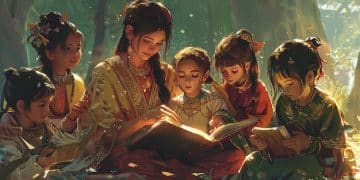
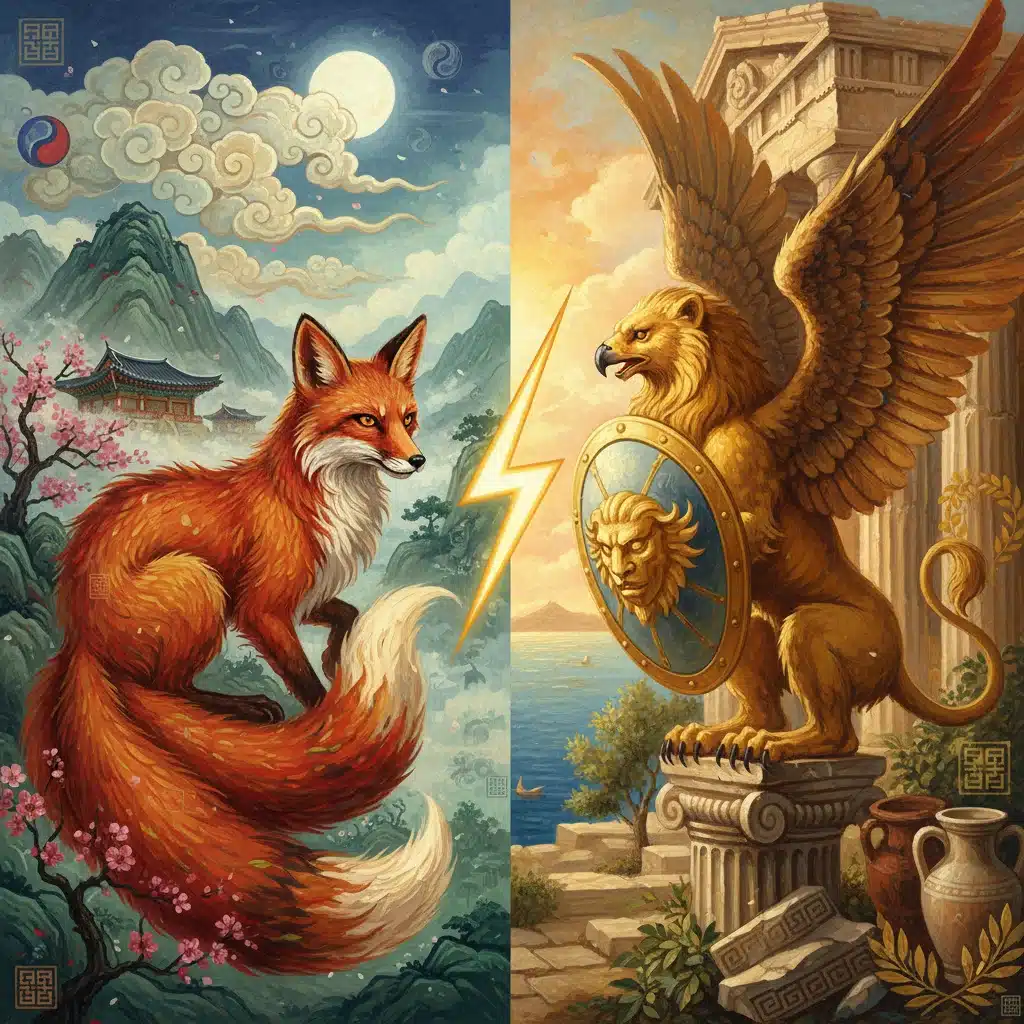
In the vast tapestry of human civilization, stories serve as the threads that weave together cultures, histories, and beliefs. From the epic sagas of ancient Greece to the enchanting narratives of the Korean peninsula, myths and folk tales offer profound insights into the human condition, our values, and our understanding of the world. This article embarks on a fascinating journey to compare Korean Western Mythology, delving into their unique characteristics, shared archetypes, and the distinct cultural lenses through which they interpret universal themes.
Anúncios
Understanding the interplay between Korean Western Mythology is not merely an academic exercise; it’s a gateway to appreciating the rich diversity of human thought and the enduring power of storytelling. While seemingly disparate, these traditions often echo similar concerns, albeit with vastly different narrative structures, character portrayals, and moral underpinnings. By examining key tales and mythological figures from both spheres, we can uncover a deeper understanding of what makes each tradition unique and what binds humanity together.
Anúncios
The Genesis: Creation Myths in Korean and Western Traditions
The origin of the world is a fundamental question addressed by virtually every mythology. Comparing the creation narratives within Korean Western Mythology reveals stark differences in cosmic order, divine agency, and humanity’s place within the grand scheme of existence.
Korean Creation Myths: Harmony, Transformation, and Nature
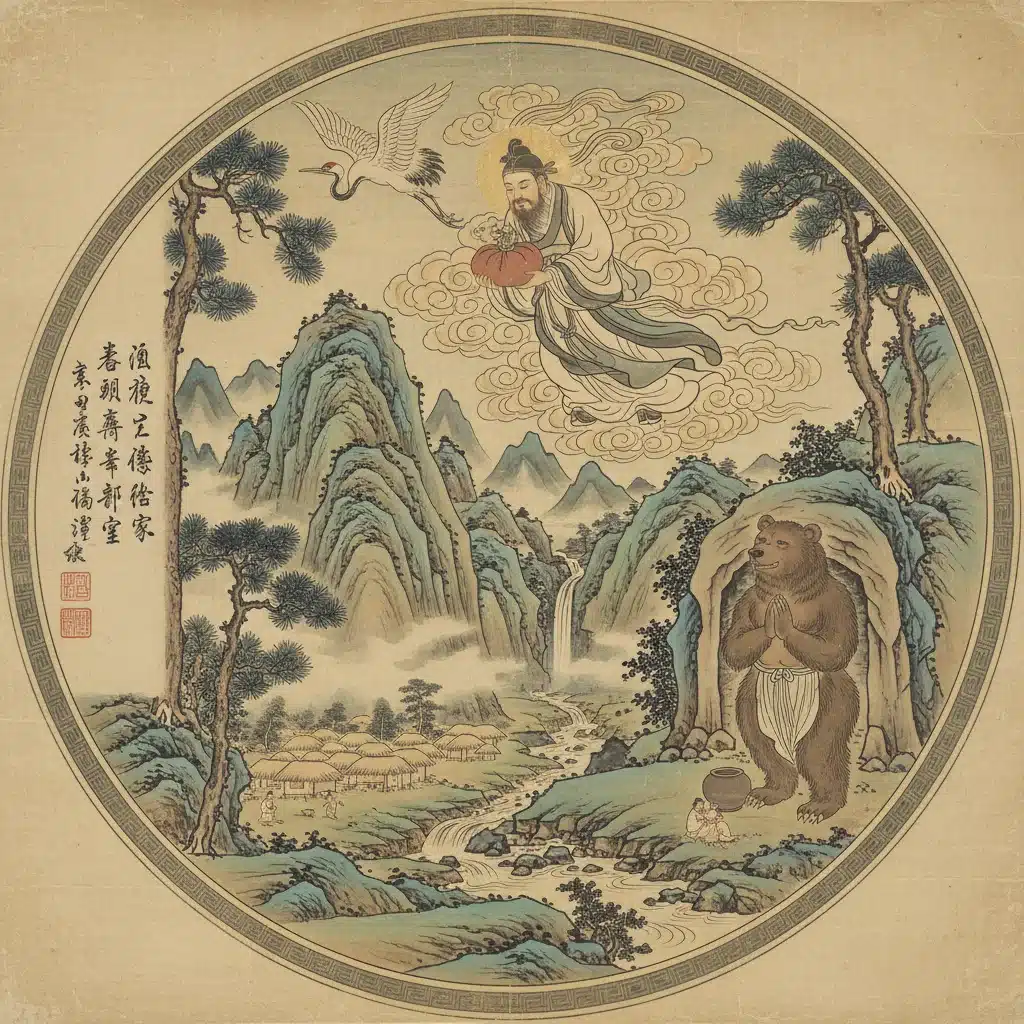
Korean creation myths often emphasize harmony with nature, transformation, and a more integrated view of the human and natural worlds. One of the most prominent creation myths is that of Dangun Wanggeom, the legendary founder of Gojoseon, the first Korean kingdom. According to this myth, Hwanung, the son of the Lord of Heaven, descended to Earth, wishing to benefit humankind. He established a city and taught humans various arts and moral principles. A bear and a tiger yearned to become human. Hwanung gave them twenty cloves of garlic and a bundle of mugwort, instructing them to eat only these and remain in a cave for 100 days. The tiger failed, but the bear persevered, transforming into a beautiful woman named Ungnyeo. She prayed for a child, and Hwanung took her as his wife, resulting in the birth of Dangun. This narrative highlights:
- Transformation: The ability of animals to become human through discipline and divine intervention.
- Divine Lineage: A direct connection between the divine and the first human ruler, emphasizing a benevolent celestial influence.
- Nature’s Role: Animals and natural elements (garlic, mugwort) play crucial roles in the process, underscoring a deep reverence for the natural world.
- Moral Perseverance: The bear’s successful transformation is a reward for its steadfastness and obedience.
Another significant aspect of Korean cosmology, though not strictly a creation myth in the Western sense, involves the interplay of Eum (Yin) and Yang, and the Five Elements (wood, fire, earth, metal, water). These philosophical concepts underpin the universe’s structure and the constant flux of existence, influencing everything from traditional medicine to geomancy. The world is not so much ‘created’ from nothing by an omnipotent deity, but rather emerges from the dynamic balance and interaction of these fundamental forces.
Western Creation Myths: Divine Fiat, Order from Chaos, and Human Dominion
In contrast, Western creation myths, particularly those stemming from Judeo-Christian traditions, often depict a singular, omnipotent deity creating the world through divine fiat. The book of Genesis, for example, describes God creating the heavens and the earth, light and darkness, flora and fauna, and finally humanity in His own image, bestowing upon them dominion over creation. Key characteristics include:
- Ex Nihilo Creation: The concept of creation ‘out of nothing’ by a supreme being.
- Hierarchical Order: A clear hierarchy with God at the apex, followed by angels, humans, animals, and the natural world, with humanity often positioned to rule over the rest of creation.
- Linear Time: Creation is often presented as a distinct event at the beginning of a linear timeline.
- Moral Framework: The act of creation is often intertwined with moral commands and the establishment of a divine law.
Greek mythology, while polytheistic, also offers creation narratives that involve bringing order out of primordial chaos. Hesiod’s Theogony describes the emergence of Gaia (Earth) and Uranus (Sky) from Chaos, leading to the birth of the Titans and eventually the Olympian gods. Here, creation is a process of successive generations, often marked by conflict and usurpation, but still moving towards a more structured, albeit tumultuous, cosmos. The emphasis is often on the establishment of power dynamics among deities and the eventual reign of Zeus. The contrast in how Korean Western Mythology approaches the very beginning of existence speaks volumes about their differing philosophical underpinnings.
Heroes and Their Journeys: Archetypes Across Cultures
The hero’s journey is a universal narrative pattern, yet the specific characteristics and motivations of heroes in Korean Western Mythology diverge significantly, reflecting distinct cultural values and societal expectations.
Korean Heroes: Filial Piety, Community, and Spiritual Growth
Korean folk tales are replete with heroes who embody virtues such as filial piety (respect for elders and parents), loyalty, perseverance, and a deep connection to their community and nature. Their journeys often involve overcoming adversity not just for personal gain, but for the well-being of their family, village, or kingdom. Examples include:
- Hong Gildong: Often dubbed the ‘Korean Robin Hood,’ Hong Gildong is a legendary figure who, despite being born to a noble father and a concubine (and thus facing discrimination), uses his supernatural abilities to fight corruption, help the poor, and establish his own utopian kingdom. His heroism is characterized by a strong sense of justice and a desire to right societal wrongs, often challenging established hierarchies. His story emphasizes social justice and the triumph of virtue over unjust systems.
- Shim Cheong: The epitome of filial piety, Shim Cheong sacrifices herself by selling her body to sailors as an offering to the Dragon King, hoping to restore her blind father’s eyesight. Her unwavering devotion is ultimately rewarded by the Jade Emperor, and she becomes an empress, leading to her father’s sight being restored. This tale underscores the paramount importance of familial duty and the belief that ultimate sacrifice for one’s parents will be divinely recompensed.
- The Dragon King’s Son (various tales): Many Korean tales feature individuals who help or are helped by mythical creatures like dragons or mountain spirits. These interactions often involve acts of kindness or wisdom, leading to rewards that benefit the community, such as abundant harvests or protection from harm. The heroes often demonstrate humility and respect for the supernatural world.
Korean heroes are often less about individual glory and more about fulfilling a role within a larger social or cosmic order. Their struggles are frequently internal or involve navigating complex moral dilemmas, leading to spiritual enlightenment or the betterment of their collective unit. The emphasis on transformation, whether personal or societal, is a recurring theme.
Western Heroes: Individualism, Glory, and Confrontation
Western mythology, particularly Greek and Roman, celebrates heroes who are often driven by individual ambition, a quest for glory, and a willingness to confront powerful adversaries, be they monstrous beasts, rival kings, or even the gods themselves. Think of:
- Hercules (Heracles): Renowned for his immense strength and the twelve labors he performed, Hercules is the quintessential Western strongman hero. His journey is one of atonement, but also of achieving unparalleled fame and eventually apotheosis. His struggles are characterized by brute force and direct confrontation.
- Odysseus: The cunning king of Ithaca, Odysseus’s epic journey home after the Trojan War is a testament to human intellect, resilience, and resourcefulness. He faces monstrous creatures, seductive enchantresses, and divine wrath, always striving to return to his family and kingdom. His individualism and strategic thinking are paramount.
- Achilles: The greatest warrior of the Achaeans, Achilles embodies martial prowess and a fierce pursuit of honor (kleos). His tragic flaw, wrath, ultimately leads to his downfall, but his glory on the battlefield is immortalized. His journey is defined by battle and the pursuit of an everlasting legacy.
Western heroes frequently exhibit hubris, challenge authority (both human and divine), and their personal journeys are often central to the narrative. While they may serve their city-states or kingdoms, their individual accomplishments and personal struggles take center stage. The concept of fate often plays a significant role, with heroes frequently attempting to defy or fulfill their predetermined destinies.
Supernatural Beings and Their Roles: Guardians, Tricksters, and Deities
The pantheon of supernatural beings in Korean Western Mythology provides a fascinating lens through which to view cultural attitudes towards power, morality, and the unknown.
Korean Supernatural Beings: Spirits, Gumiho, and Dragons
Korean folklore is populated by a diverse array of spirits (gwisin), mythical creatures, and benevolent or malevolent entities that often interact directly with humans. These beings frequently possess moral ambiguity, reflecting the complexities of human nature.
- Gumiho (Nine-Tailed Fox): Perhaps one of the most iconic Korean mythical creatures, the Gumiho is a fox that can live for a thousand years and transform into a beautiful woman, often preying on humans by consuming their livers or hearts. The Gumiho represents both allure and danger, a creature that can be cunning and cruel, yet sometimes tragic, yearning for humanity. Their stories explore themes of temptation, identity, and the boundaries between human and animal.
- Yong (Dragons): Unlike the often malevolent dragons of Western lore, Korean dragons are predominantly benevolent creatures associated with water, rain, and good fortune. They are seen as guardians of the seas and rivers, often bestowing blessings or intervening in human affairs to maintain balance. Tales of dragons often involve them helping heroes or protecting kingdoms, symbolizing power, wisdom, and prosperity.
- Dokkebi (Korean Goblins/Ogres): Dokkebi are playful, mischievous, and sometimes terrifying spirits or goblins that possess supernatural powers. They are often associated with inanimate objects that have become imbued with spiritual essence. Dokkebi can be tricksters, granting wishes, or playing pranks, reflecting a more whimsical and unpredictable aspect of the spirit world. They are not inherently evil but embody the capricious nature of fortune.
- Mountain Spirits (Sanshin): Revered as guardians of specific mountains, Sanshin are powerful and often ancient spirits. They are depicted as elderly men or women, often accompanied by a tiger, and are believed to bestow blessings, protect the land, and sometimes punish those who disrespect nature. They embody the deep spiritual connection Koreans have with their natural environment.
The supernatural in Korean tales is often deeply intertwined with the natural world, and interactions with these beings frequently serve as moral lessons or explanations for natural phenomena. There’s a strong emphasis on maintaining balance and respect for unseen forces.
Western Supernatural Beings: Gods, Monsters, and Fairies
Western mythology offers a distinct pantheon of powerful gods, terrifying monsters, and various magical creatures, each with specific roles and often more clearly defined moral alignments.
- Greek and Roman Gods: The Olympian gods, such as Zeus, Hera, Poseidon, Hades, Athena, and Apollo, are anthropomorphic beings with immense power but also human-like flaws and emotions. They intervene directly in human affairs, often driven by jealousy, love, wrath, or favoritism. Their stories explore themes of fate, free will, divine justice, and the consequences of challenging immortal beings.
- Monsters (e.g., Minotaur, Medusa, Cyclops): Western mythology is rich with monstrous creatures that often represent chaos, danger, or the dark aspects of human nature. These monsters frequently serve as obstacles for heroes to overcome, symbolizing the triumph of order over chaos, or civilization over savagery. Their defeat often brings glory and establishes the hero’s prowess.
- Fairies, Elves, and Dwarves: From Germanic and Celtic traditions, these beings inhabit a separate, often hidden, magical realm. Fairies can be benevolent or malevolent, enchanting or dangerous, often interacting with humans through tricks, blessings, or curses. Elves and dwarves, particularly in Norse mythology, are often associated with nature, craftsmanship, or subterranean realms, possessing distinct social structures and magical abilities.
- Angels and Demons: In Judeo-Christian mythology, angels are divine messengers and servants of God, while demons are fallen angels or malevolent spirits who seek to corrupt humanity. These beings represent the cosmic struggle between good and evil, with clear moral distinctions and roles within a divine plan.
The supernatural in Western tales often highlights a more pronounced separation between the human and divine realms, with gods and monsters serving as powerful external forces that shape human destiny or challenge human resolve. The struggle between good and evil is a more explicit and often central theme.
Symbolism and Cultural Values: A Comparative Lens
Beyond the narratives themselves, the symbolism embedded within Korean Western Mythology offers a profound understanding of the respective cultures’ values, fears, and aspirations.
Korean Symbolism: Harmony, Family, and Resilience
Korean folk tales are imbued with symbolism that reflects a society deeply rooted in Confucian and Buddhist principles, alongside indigenous shamanistic beliefs:
- The Bear: As seen in the Dangun myth, the bear symbolizes patience, perseverance, and transformation. It is often revered as a sacred animal and an ancestral figure.
- The Tiger: A complex symbol, the tiger can represent both fierce power and guardianship. It is often seen as a mountain spirit’s messenger or companion, but also as a dangerous predator. It embodies the wild, untamed aspects of nature.
- Water and Mountains: These natural elements are highly revered. Mountains are often seen as homes of spirits and sources of spiritual energy, while water symbolizes purity, life, and the flow of existence.
- Colors (e.g., Obangsaek): The traditional Korean color spectrum (red, blue, yellow, white, black) holds deep cosmological significance, representing the five elements, directions, and virtues, reflecting a holistic view of the universe.
- Filial Piety (효, Hyo): This is not just a value but a central theme, often leading to divine rewards or demonstrating ultimate virtue. It underscores the importance of family bonds and respect for elders.
- Han (한): A uniquely Korean concept, Han describes a collective feeling of sorrow, resentment, and unfulfilled longing, often arising from historical injustices or personal suffering. It permeates many folk tales, giving them a poignant and melancholic depth, yet also a sense of resilience.
The symbolism in Korean tales often emphasizes interconnectedness, the cyclical nature of life, and the importance of collective well-being over individual glory. There’s a subtle moral framework that rewards virtue, especially kindness, loyalty, and filial devotion, and often punishes greed or arrogance.
Western Symbolism: Duality, Individualism, and Divine Order
Western mythology, influenced by diverse traditions including Greek, Roman, Norse, and Judeo-Christian thought, often features symbolism reflecting a focus on duality, individual struggle, and the establishment of order:
- Light and Darkness: A pervasive symbol representing good and evil, knowledge and ignorance, life and death. This duality is central to many Western narratives, from creation to heroic quests.
- The Serpent/Dragon: Often a symbol of evil, temptation, chaos, or primal forces to be overcome. While some traditions (like Norse’s Jörmungandr) have more nuanced serpentine figures, the dragon as a hoard-guarding, destructive beast is a common archetype.
- The Tree of Life/Knowledge: In Judeo-Christian tradition, these trees symbolize divine connection, wisdom, and humanity’s fall from grace. They represent profound moral and existential choices.
- The Sword: A powerful symbol of justice, authority, warfare, and often the hero’s personal strength or destiny. Excalibur, the Sword of Damocles, and other legendary blades exemplify this.
- The Labyrinth/Journey: Symbolizes a quest for self-discovery, overcoming challenges, and navigating complex existential paths. The Minotaur’s labyrinth or Odysseus’s long voyage are prime examples.
- The Crown/Throne: Represents power, sovereignty, and legitimate rule, often sought after or contested by heroes and villains alike.
Western symbolism frequently highlights strong dichotomies (good/evil, order/chaos), the importance of individual destiny or choice, and the consequences of challenging established authority (divine or mortal). The narratives often explore the human struggle against fate, the search for truth, and the establishment of moral codes.
The Enduring Legacy: Influence on Modern Culture
Both Korean Western Mythology continue to exert a profound influence on contemporary culture, shaping literature, film, art, and even popular media. Their stories provide a wellspring of inspiration, offering timeless archetypes and narrative structures that resonate with modern audiences.
Korean Folk Tales in the Modern World
In Korea, folk tales are not relics of the past but living narratives that continue to evolve. They are frequently reinterpreted in:
- K-Dramas and Films: Supernatural elements, Gumiho, Dokkebi, and various spirits are popular themes in hit dramas like Goblin, My Girlfriend is a Gumiho, and Kingdom, blending traditional folklore with modern storytelling.
- Webtoons and Manhwa: Digital comics often draw heavily from traditional mythology, re-imagining characters and plots for new generations.
- Art and Literature: Contemporary artists and writers often infuse their work with traditional motifs and themes, exploring identity, history, and social commentary through the lens of folklore.
- Tourism and Festivals: Many historical sites and cultural festivals celebrate figures and events from Korean mythology, preserving and promoting these stories.
The reinterpretation of Korean folk tales often highlights their adaptability, allowing them to address contemporary issues while retaining their cultural essence. They offer a unique perspective on Korean identity and collective memory, fostering a sense of connection to the past.
Western Mythology in the Modern World
Western mythology, particularly Greek and Roman, has a pervasive presence in global culture:
- Hollywood Films and TV Series: Blockbusters like Clash of the Titans, Percy Jackson, and superhero narratives often draw heavily from Greek and Roman heroic archetypes and mythical creatures.
- Literature: From epic poetry to modern fantasy novels (e.g., Tolkien, Rowling), the heroic quest, mythical beasts, and divine interventions are foundational elements.
- Art and Architecture: Classical mythology continues to inspire artists and architects, with countless sculptures, paintings, and buildings referencing ancient gods and heroes.
- Language and Idioms: Many English words and phrases (e.g., Herculean task, Achilles’ heel, Pandora’s Box) originate from Western mythology, demonstrating its deep linguistic impact.
The influence of Western mythology is often seen in its foundational role in Western literary and artistic traditions, providing a shared cultural vocabulary and a rich source of archetypal narratives that continue to be reinterpreted and re-imagined for global audiences.
Conclusion: Bridging Worlds Through Story
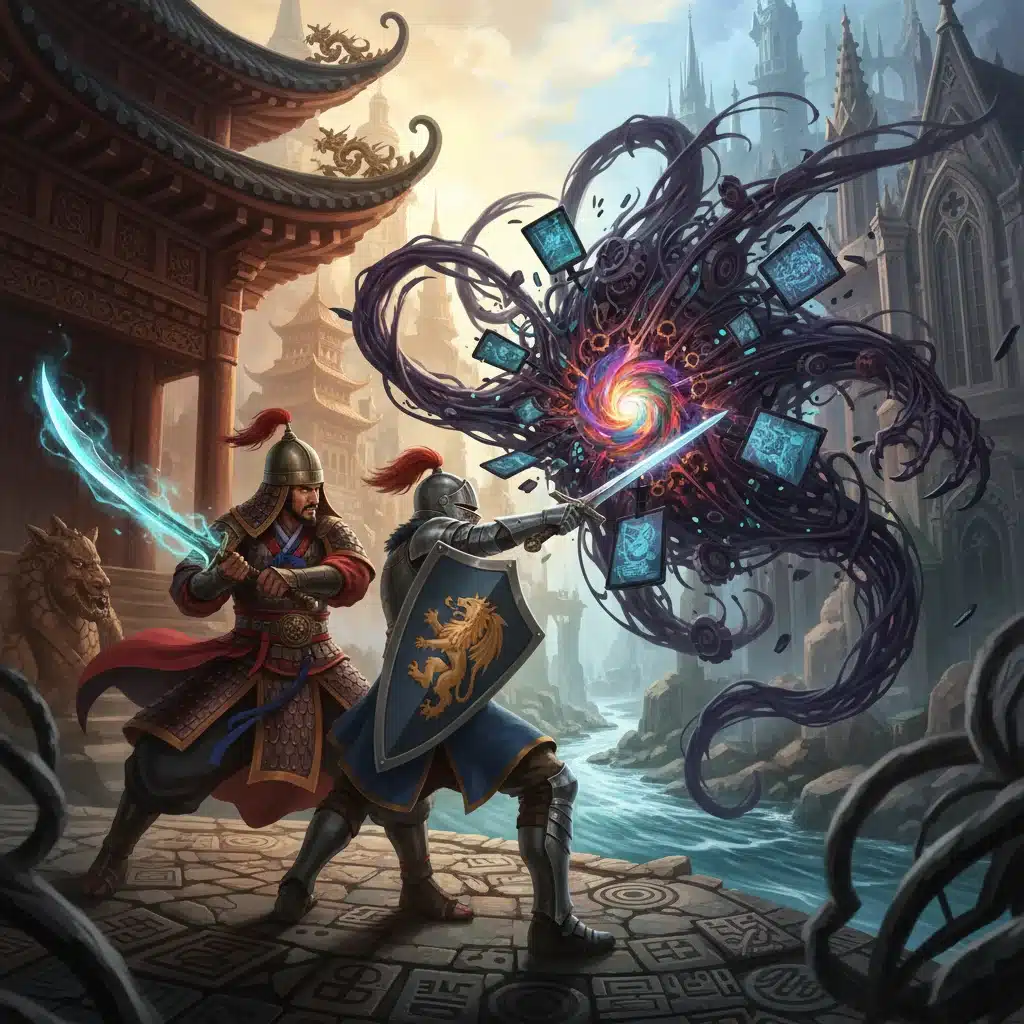
Comparing Korean Western Mythology reveals both universal human experiences and distinct cultural perspectives. While Western myths often emphasize individualism, clear moral dichotomies, and the struggle against external forces, Korean folk tales tend to highlight harmony with nature, filial piety, collective well-being, and the complexities of moral ambiguity. Both traditions, however, provide profound insights into the human condition, the search for meaning, and the enduring power of storytelling.
From the cosmic order of creation to the trials of heroes and the whims of supernatural beings, these narratives serve as cultural blueprints, shaping identity, transmitting values, and offering explanations for the inexplicable. By exploring the rich tapestry of Korean Western Mythology, we not only gain a deeper appreciation for the diversity of human imagination but also recognize the shared threads that connect us all, proving that even across vast geographical and cultural divides, the human heart yearns for stories that illuminate our world.
The continuous reinterpretation and adaptation of these ancient tales in modern media ensure their longevity, allowing new generations to engage with their wisdom, wonder, and timeless relevance. As we move forward, understanding these mythologies becomes increasingly important, offering a lens through which to navigate our complex, interconnected world with greater empathy and cultural intelligence. The stories of the past, whether from the Korean peninsula or the Western world, continue to guide us, inspire us, and remind us of the boundless creativity of the human spirit.